This article contains affiliate links. I may earn a commission on purchases made through these links.
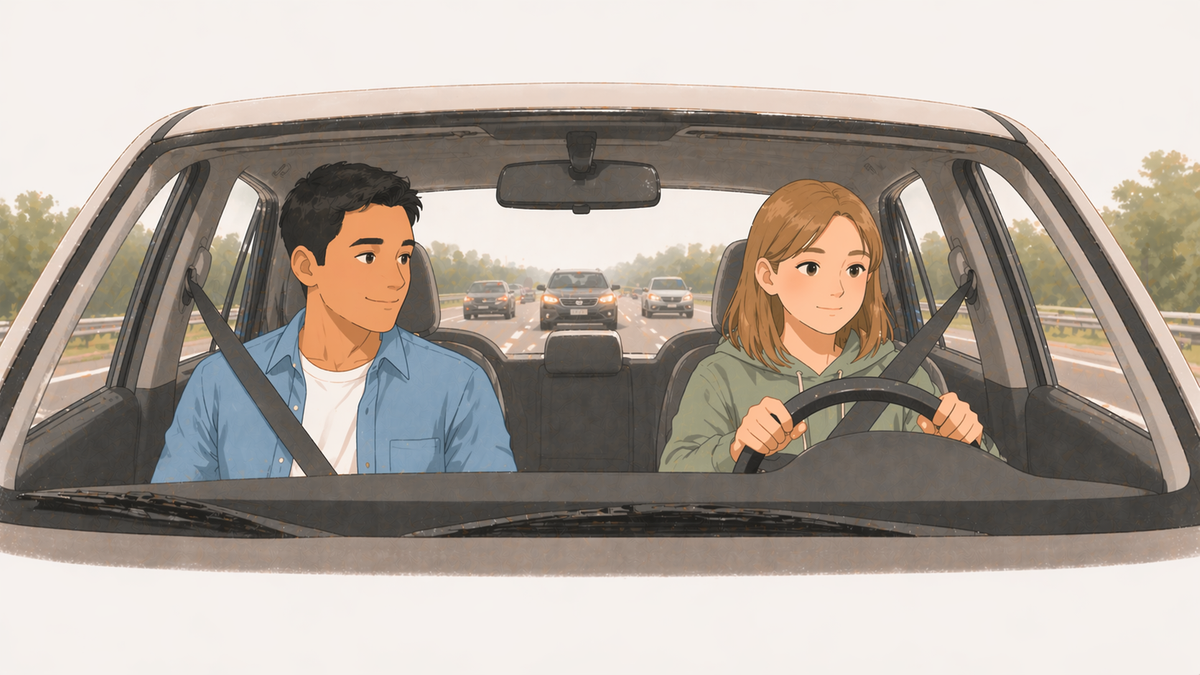
I haven't taken my daughter on the highway yet.
But I remember exactly what it felt like when it was my turn.
My father's approach to teaching me was immediate. We got on the on-ramp and he told me to floor it.
I want you to understand that we had spent the previous few weekends discussing my heavy foot on residential streets.
I had sweat on my forehead within seconds. The cars around me felt impossibly close. Everyone seemed to be trying to get past me, which I understand now because they probably recognized a new driver and wanted out of range of my mistakes.
I eventually got nervous enough that I decided the smart thing to do was just take the next exit. My father, in so many words, told me to keep going.
I didn't learn anything useful in those first few minutes. Merging was one problem and being at highway speed was a completely separate one, and both hit me at the same time.
What I know now is that they shouldn't have.
Why Merging Feels So Hard
It's not just nerves. There are real reasons highway merging is difficult for new drivers.
Speed judgment at 65+ mph is genuinely hard. At lower speeds, teens have time to develop a feel for distance and timing. The highway resets all of that. A gap that looks big enough closes faster than they expect.
The on-ramp forces a decision with a deadline. Unlike most driving situations where a teen can slow down and think, the ramp ends. They have to commit.
They're managing two things at once for the first time. Accelerating to highway speed while scanning for a gap and deciding when to merge is a lot of cognitive load for someone who still thinks through every action individually.
Understanding this makes you a better coach. The goal isn't just getting them on the highway. It's breaking the skill into pieces small enough to practice separately. It is really just thinking one step ahead applied at 65 miles per hour.
Before You Drive: Prepare at Home First
The worst time to explain merging is when you're already on the on-ramp.
Before you go anywhere near a highway, walk through the concept at home. Literally talk through what's going to happen:
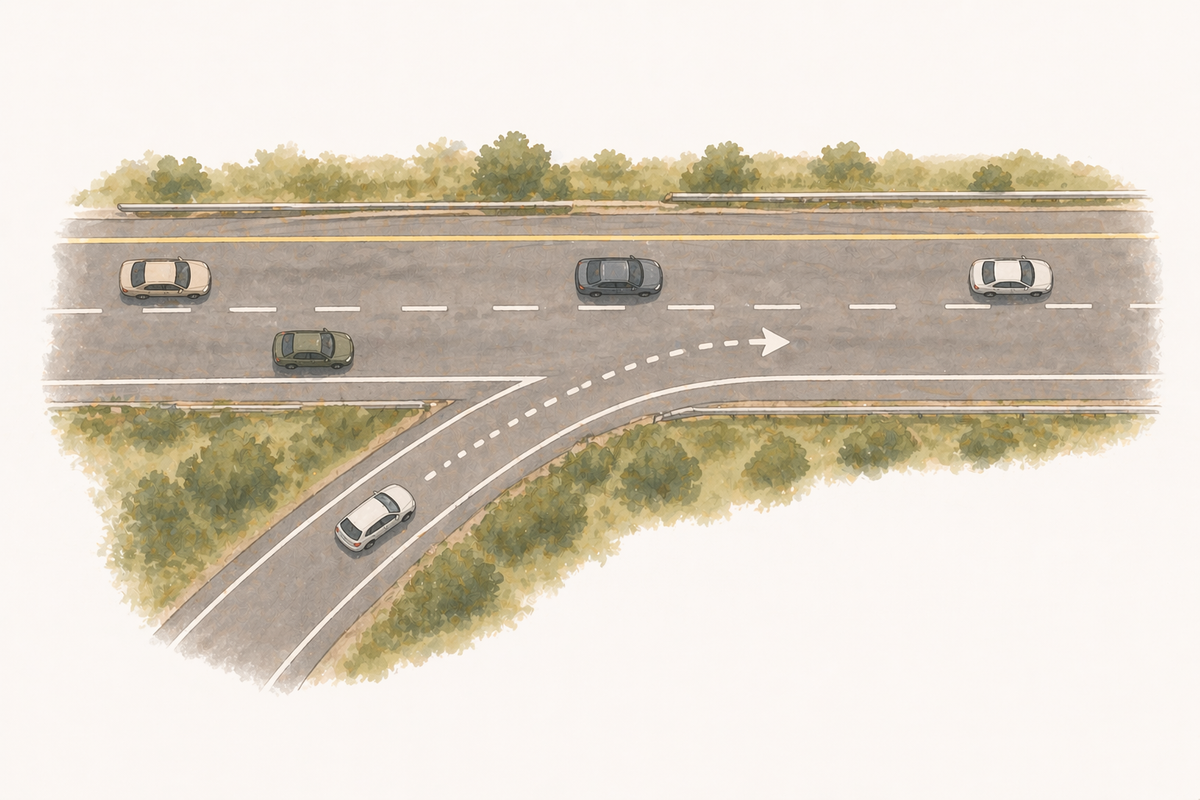
The on-ramp is there to give them space to accelerate. Use all of it. They should be at or close to highway speed before the end of the ramp.
While accelerating, they're scanning the lane they're merging into. Looking for a gap. Not a perfect gap. A usable one.
When they find a gap, they commit. No slowing down, no hesitating. They match the speed of traffic and move into the lane.
Then they breathe.
Walk through this a few times before you leave. Ask them to describe it back to you. The more familiar the concept is before they're in the driver's seat, the less their brain has to process in the moment.
The Technique: What to Actually Do on the Ramp
Start the scan early. Before the ramp curves onto the highway, they should already be checking the mirror and looking over their left shoulder. Not when they reach the merge point. Before. This gives them time to identify gaps instead of reacting to whatever's there when they arrive. A good merge starts with paying attention earlier than feels natural.
Use the whole ramp. Most new drivers slow down when they feel uncertain. The on-ramp requires the opposite. They need to accelerate while they're still deciding. If they're going 40 mph at the end of the ramp, the merge will be terrifying because traffic is at 65. The speed gap is the problem.
Pick a gap, not the perfect gap. Beginners wait for a huge open space. That's not usually what's available. Help them learn to identify an adequate gap. On most highways, four to five seconds of space is enough.
Commit and match speed. Once the gap is chosen: accelerate to match the traffic in that lane and slide in. Not slow down and hope. Match the flow and join it.
After the merge, stay right. Tell them before they start. Once they're on, stay in the right lane. No lane changes until they're settled.
Common Mistakes and What to Say
Braking on the on-ramp. When teens get anxious, they slow down. This makes everything worse. Tell them before you leave: if you feel like slowing down on the ramp, that's the wrong instinct. Speed up instead.
Watching only the car immediately behind them. New drivers fixate on the nearest threat. Teach them to scan further back. The car two or three positions behind matters too.
Stopping at the merge point. This happens when they miss the gap and panic. It's dangerous. Tell them beforehand: if we miss the gap, we slow and reset at the end of the ramp. Some ramps have a merge lane that allows this. Know your ramp before you go.
Overcorrecting after the merge. First successful merge and they drift right to give space. That puts them on the shoulder. Remind them: center of the lane, then relax.
Highway practice pairs with the formal curriculum. Aceable's online driver's ed handles the bookwork side on their schedule, which leaves the on-ramp to you.
How to Practice: A Progression That Works
Don't start on a busy interstate at rush hour.
Session 1: Early morning, light traffic. Find an on-ramp that feeds onto a highway with lower speeds or light traffic. Do the merge three or four times. Talk through each one after.
Session 2: Moderate traffic, same ramp. Return to the same ramp with a bit more traffic. Familiarity with the geometry removes one variable.
Session 3: Busier conditions, different ramp. Introduce a different ramp and more traffic. The skill transfers faster than expected once the basics are solid.
Session 4 and beyond: Real conditions. Include highway merging regularly. The goal is repetition until it stops requiring conscious effort.
Most teens need somewhere between five and fifteen highway entries before it starts to feel manageable. The speed of progress matters less than the consistency of practice.
The Bigger Lesson
I eventually got comfortable with highway merging. I don't remember exactly when it clicked. I just remember that I kept doing it, kept adjusting, and at some point it stopped feeling like a problem. It comes back to the first thing I told my daughter about driving: you cannot control the other cars, only the space you leave yourself.
I also still think most adults don't know how to be courteous about it. It's not that hard. We're both going the same direction. We can take turns.
But that's a different lesson.
Try This
1. Talk through the concept before you drive. Don't let the on-ramp be the first time they've thought about what merging involves.
2. Remind them to accelerate, not slow down. Say it before every ramp until it's automatic.
3. Start on quiet roads and build up. Early morning, light traffic, familiar ramp. Add complexity once the basics land.
4. Let them miss a gap without consequence. If they hesitate and miss the window, handle it calmly. How you respond to the mistake shapes whether they try confidently next time.
5. Count the sessions, not the quality. Ten entries beats two perfect ones. Repetition is the whole game.
The New Driver's Parent Checklist is a 4-page printable for parents teaching a teen to drive. Pre-drive checks, the four skill stages, and word-for-word scripts for the hard moments. Download it free →
The first few on-ramps will be rough.
That's fine.
The skill is real, it's learnable, and most teens get there faster than you expect once they stop trying to do it perfectly and start doing it regularly.